



The Strait of Hormuz is one of the world’s most critical supply chain chokepoints, affecting oil, fertilizers, industrial commodities, and global inflation.
The Strait of Hormuz is closed again.
Markets barely react anymore.
It opens, it closes, tensions rise, then ease and investors have grown used to the cycle.
But beneath this “familiar” pattern lies a much bigger question:
Is the Strait of Hormuz just an oil story or something far more critical?
Why the Strait Matters More Than You Think
Most people understand the Strait as a key oil shipping route.
That is true.
But incomplete.
The Strait is not just about oil. It is a global supply chain chokepoint.
It directly impacts the flow of:
- fertilizers
- petrochemicals (naphtha, methanol)
- industrial gases like helium
- and critical inputs for semiconductors and new energy
If the Strait is disrupted, the consequences go far beyond energy prices.
It affects food, manufacturing, and technology.
1. Helium: The Invisible Risk to Semiconductors
Helium rarely makes headlines.
But it is one of the most critical materials in modern industry.
With a boiling point of -269°C, helium is essential for:
- semiconductor cooling
- leak detection
- high-precision manufacturing
There is no easy substitute.
A Fragile Supply Chain
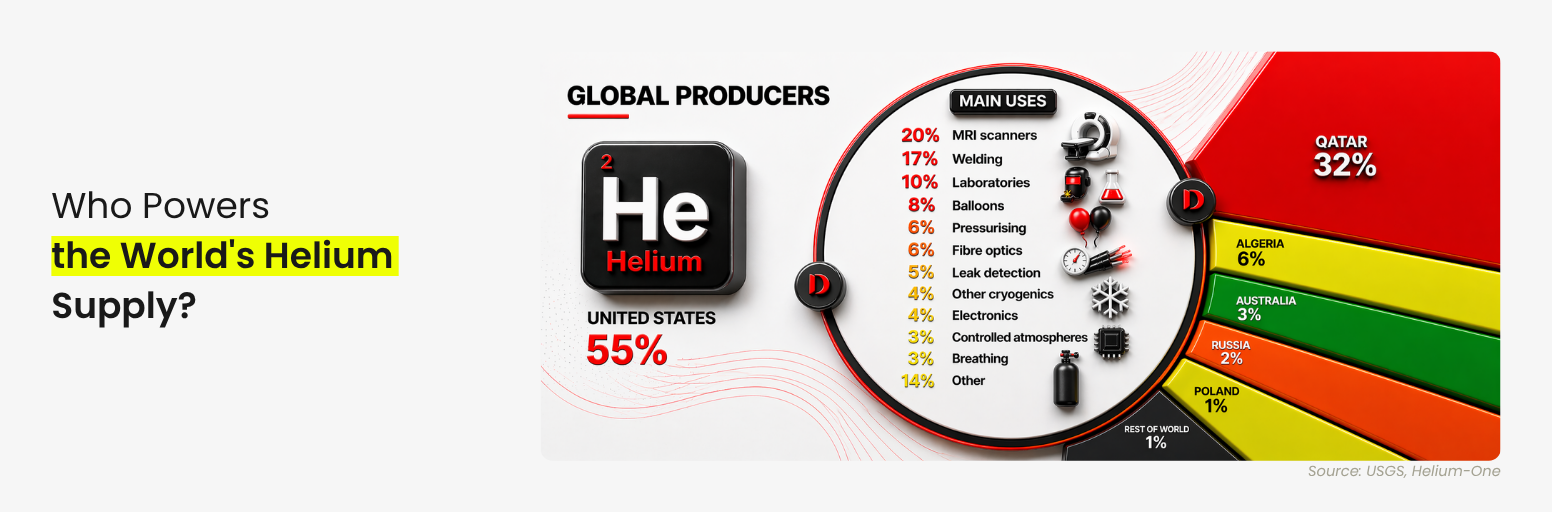
- The US is the largest producer
- Qatar accounts for roughly one-third of global supply
- Most Qatari helium exports rely on the Strait of Hormuz
And here’s the problem:
Helium cannot be stored long-term
There are no meaningful strategic reserves.
Even the US depends on Qatar for 28% of its supply.
For countries like:
- South Korea (65%)
- Japan (33%)
The dependency is even higher.
Why This Matters
A disruption here does not just affect one industry.
It hits the global semiconductor supply chain.
And yet, markets remain focused on oil.
Helium shortages are starting to impact global tech supply chains.
2. Fertilizers: The Hidden Driver of Food Inflation
If energy drives costs, fertilizers drive food.
And food drives everything else.
A Critical Bottleneck
In 2025:
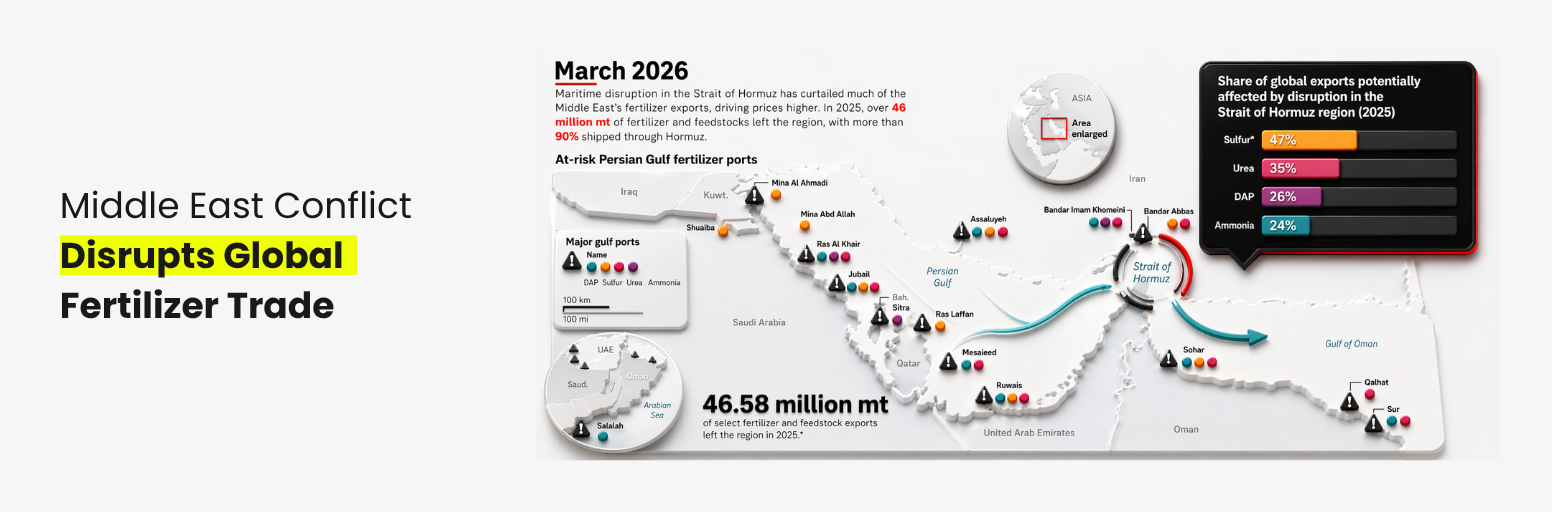
- Gulf exports reached 46.58 million tons
- Over 90% passed through the Strait
Key materials include:
- Urea
- DAP
- Ammonia
- Sulfur
These represent a large share of global supply.
Timing Makes It Worse
Agriculture is not flexible.
You cannot delay planting.
- Northern Hemisphere: March–May
- India: June–July
- Southern Hemisphere: September–November
This conflict is hitting during peak planting season.
The Real Impact
This is not about shortages alone.
It is about timing + price pressure.
Even without famine:
Food prices will rise
And since food is a non-negotiable expense, it reduces spending elsewhere.
That weakens global consumption.
3. Naphtha and Methanol: The Industrial Backbone
These are less visible but just as critical.
Naphtha: The Foundation of Manufacturing
Naphtha is used to produce:
- plastics
- rubber
- industrial materials
It underpins industries like:
- automotive
- healthcare
- electronics
- aerospace
Heavy Dependence on the Strait
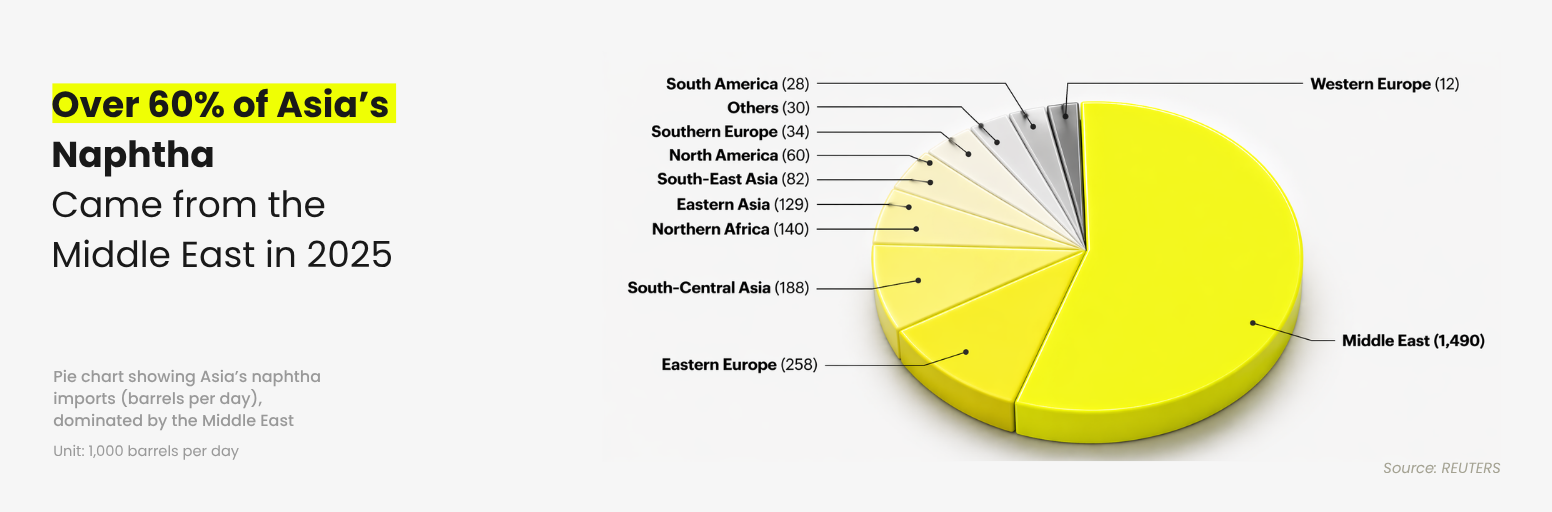
Asia relies heavily on imports:
- Japan: 60% import dependence
- South Korea: 45%
- China: up to 40% from the Middle East
And:
60% of these flows pass through the Strait
Methanol: Another Pressure Point
- Derived from natural gas
- ~35% of global trade passes through the Strait
Already, chemical producers are responding:
- Cutting operating rates
- Reducing output
This is not theoretical.
Production is already slowing.
4. The Bigger Picture: A Delayed Inflation Shock
Recent CPI and PPI data came in below expectations.
At first glance, this suggests inflation is under control.
But that may be misleading.
Inflation Has Not Fully Hit Yet
What we are seeing is a timing gap.
Supply chain disruptions take time to show up in data.
- The shock is real
- It just hasn’t fully transmitted yet
The Consumer Impact Is Already Visible
Take the US:
- Average tax refund: +$350 YoY
- Fuel costs increased significantly
Even if prices settle:
Households still spend ~$560 more per year on fuel
The benefit disappears.
5. What This Means for the Future
This is not just a short-term disruption.
It is a structural signal.
Supply Chain Security Becomes a Priority
Countries will rethink dependence on chokepoints like Hormuz.
This leads to:
- diversification of supply routes
- reshoring and localization
- geopolitical realignment
Energy Transition Accelerates
Repeated oil shocks will push investment into:
- solar
- wind
- nuclear
Energy security becomes a strategic priority.
New Winners May Emerge
As reliance shifts:
- West Africa
- the Americas
- Russia
could gain importance in global supply chains.
Currencies and assets tied to these regions may benefit.
Industrial Innovation Will Follow
Companies will look for alternatives:
- new materials
- new processes
- reduced dependence on traditional inputs
This could reshape entire industries.
What This Means for Markets
Markets are still focused on oil.
But the real story is bigger.
This is a multi-layer supply shock:
- energy
- food
- industrial production
- technology
And it has not fully played out yet.
Final Insight
The Strait of Hormuz is not just a choke point for oil.
It is a choke point for the global economy.
And when supply chains are disrupted at this scale:
- Inflation is not just possible
- It is delayed
- And when it arrives
- It spreads everywhere